


Product-led growth
Product-led growth, or PLG, is a growth model where the product experience drives a meaningful part of acquisition, activation, conversion, retention, and expansion. Users can experience value before or alongside a traditional sales process.
Common PLG motions include free trials, freemium plans, self-serve onboarding, usage-based adoption, collaborative invitations, templates, and product-qualified leads.
PLG does not mean the company has no sales or marketing team. It means product behavior carries more of the work required to prove value and move the customer forward.
Why it matters
A strong product-led motion can reduce friction between interest and value. Buyers can test the workflow, invite teammates, and understand the product before a long sales cycle.
That can improve acquisition efficiency and change CAC, especially for products with a large addressable user base and a short path to value.
PLG can also produce better buying signals. Product usage reveals which accounts activate, collaborate, hit limits, return, and expand. Sales can focus on accounts showing real value instead of relying only on form submissions.
The model is not suitable for every product. Complex implementation, security requirements, data migration, custom workflows, and high organizational risk may still require guided sales and onboarding.
How it works
A product-led growth loop usually has six stages.

First, acquisition. Users discover the product through search, content, referrals, integrations, communities, or invitations.
Second, activation. The user completes the actions that make the product usable.
Third, value. The product delivers a meaningful result quickly enough for the user to continue.
Fourth, conversion. The user or account pays after experiencing value, reaching a limit, or needing more capability.
Fifth, retention. The product becomes part of a repeated workflow.
Sixth, expansion. More users, usage, features, teams, or business units increase account value.
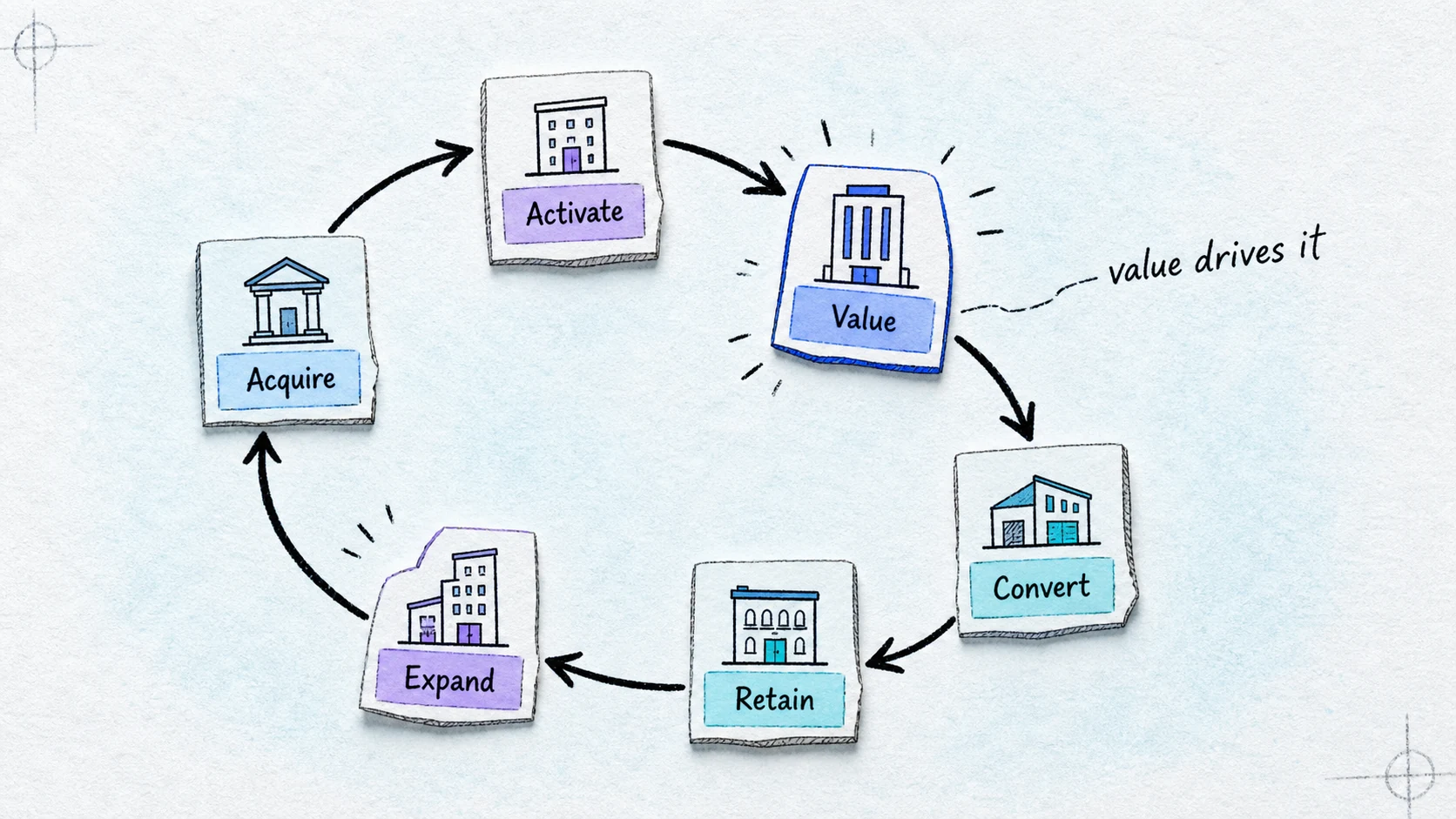
The loop depends on product instrumentation and clear definitions. A signup is not activation. Activity is not value. Expansion is not healthy if retention is weak.
SaaS example
Imagine a collaborative reporting product. One user starts a free workspace, imports data, publishes a dashboard, and invites colleagues. Collaboration increases the account's value and creates an internal distribution loop.
When usage or governance needs grow, the account converts to a paid plan. Larger accounts may enter an inbound sales motion for security, procurement, and rollout support.
The sales funnel should include product stages such as activation and product-qualified account, not only marketing leads.
Common mistakes
The first mistake is calling a free trial a PLG strategy without designing activation and retention.
The second mistake is optimizing signups while ignoring whether users reach value.
The third mistake is forcing self-serve buying on accounts that need security or organizational support.
The fourth mistake is separating product data from the wider GTM system and LTV economics.
How we see it
Product-led growth works when product value creates momentum. Free access alone does not create that momentum; the product must help the right user reach a meaningful result and give the account a reason to return, pay, and expand.