


Inbound sales
Inbound sales is a sales motion that responds to buyer interest and helps that buyer move from a demand signal to a qualified conversation, opportunity, and purchase. The buyer initiates the signal through an action such as requesting a demo, starting a trial, downloading a resource, attending an event, replying to content, or contacting the company.
The signal does not automatically mean the account is ready to buy. Inbound sales qualifies the account, understands intent, routes the buyer, and creates the right next step.
Why it matters
Inbound demand can arrive with stronger context than a cold conversation, but speed and relevance matter. A high-fit buyer can lose interest if the response is slow, generic, or routed to the wrong person.
Inbound sales connects marketing and product demand to revenue. It helps the team understand which content, channels, offers, and product actions create real sales pipeline, not only lead volume.
It also protects sales capacity. Qualification keeps low-fit downloads and casual interest from consuming the same attention as urgent, high-value buyers.
The response should still feel connected to the action that created the signal.
How it works
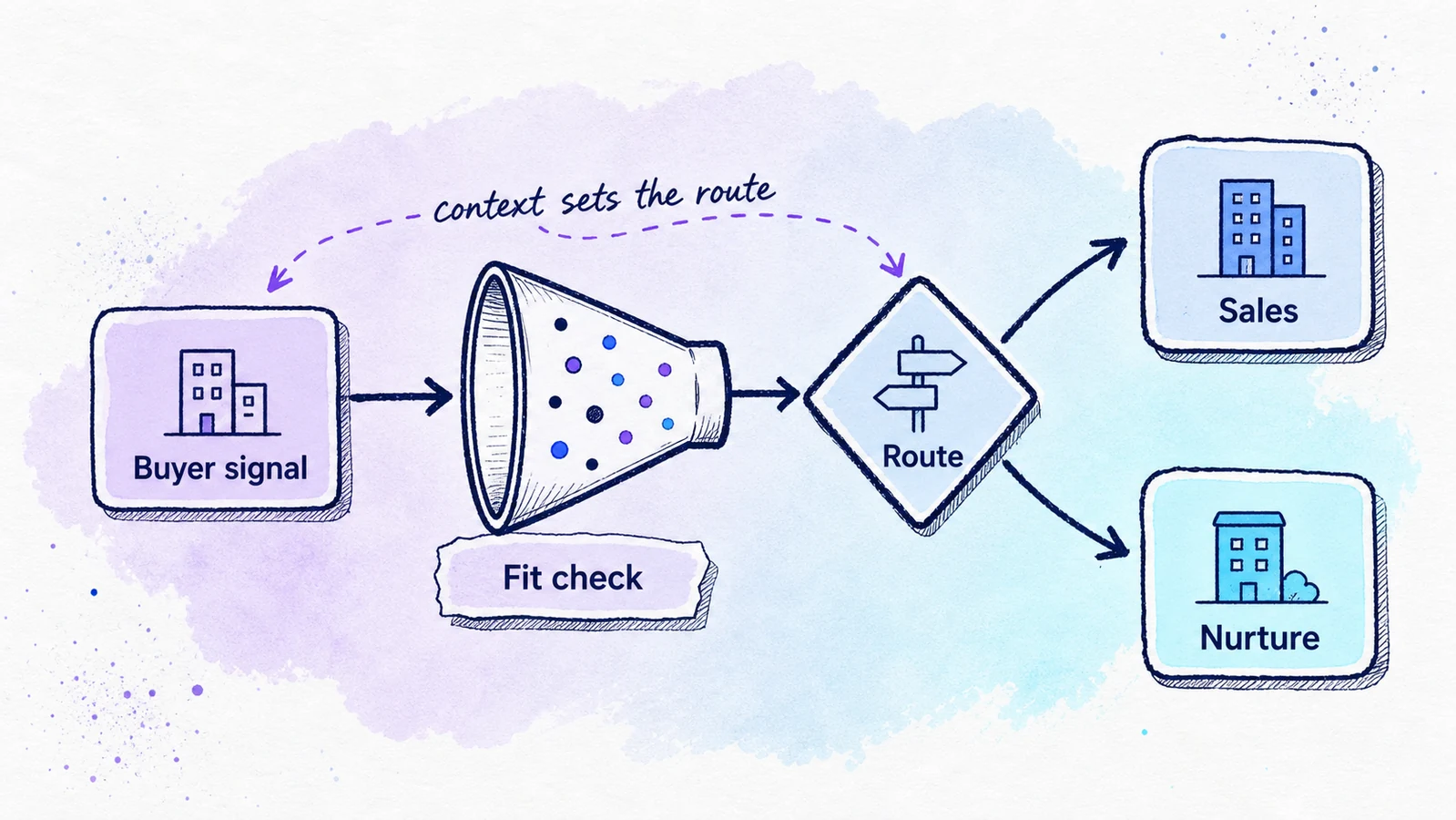
An inbound sales motion usually has five steps.

First, signal capture. The company records the buyer's action, source, account, product usage, and available context.
Second, qualification. The team checks fit, role, problem, urgency, and the likely buying path. An SDR, automated rule, or product workflow may handle the first pass.
Third, routing. The signal goes to the right owner based on account, region, segment, product, or customer status.
Fourth, response and discovery. The seller connects the buyer's action to a useful conversation instead of repeating information the buyer already shared.
Fifth, opportunity creation or nurture. A qualified buyer moves to an account executive; an early buyer receives a more appropriate follow-up path.
SaaS example
Imagine a security SaaS company receiving a demo request from an enterprise account. The form says little, but the account has visited pricing and integration pages several times.
The inbound workflow can combine those signals, route the account to enterprise sales, and prepare discovery around security review, integrations, stakeholders, and timeline.
A smaller company starting a free trial may enter a product-assisted path instead. The buyer persona and behavior determine the response.
Common mistakes
The first mistake is treating every form fill as equal buying intent.
The second mistake is asking the buyer to repeat information the company already captured.
The third mistake is measuring leads without connecting them to the sales funnel, opportunity quality, and revenue.
The fourth mistake is routing by geography when product, account ownership, or customer status matters more.
How we see it
Inbound sales is a response system. The quality of the motion depends on how well the company reads the signal, respects the buyer's context, and creates the right next step quickly.