


MQL
MQL means marketing qualified lead. It is a person or account that meets agreed marketing criteria for fit and engagement, making it ready for further qualification, sales review, or a higher-priority nurture path.
An MQL is not automatically ready to buy. It indicates that marketing has found enough evidence to change how the lead is handled.
Why it matters
Marketing can generate many contacts and signals. The MQL stage helps separate general interest from demand that deserves closer attention.
A clear definition also creates an operating agreement between marketing and sales. Marketing knows which evidence is required before handoff. Sales can compare MQLs with SQLs, opportunities, and revenue to show which criteria create useful pipeline.
Without that feedback, MQL volume can grow while sales quality falls.
How it works

MQL criteria usually combine fit and behavior.
Fit may include industry, company size, region, role, seniority, technology, and alignment with the target buyer persona.
Behavior may include demo requests, event attendance, repeated pricing-page visits, category content, email response, or other meaningful engagement.
Lead scoring often combines these signals and applies an MQL threshold. Some companies use a direct rule, such as a high-fit account requesting a comparison guide.
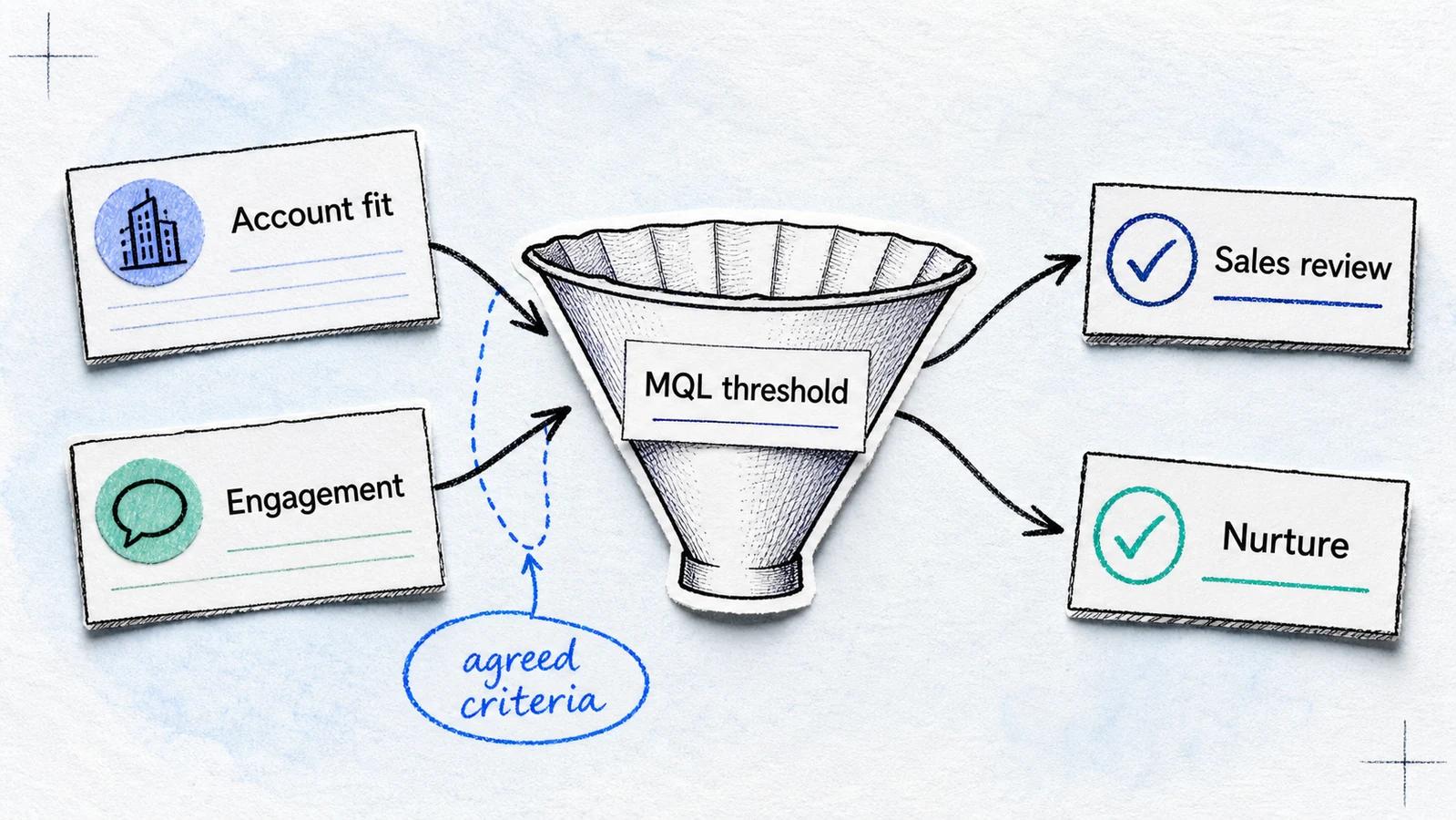
After qualification, the MQL may go to sales review, an SDR, or a targeted nurture path. The route should reflect sales capacity and buyer readiness.
The handoff does not end the buyer's path. In HockeyStack's B2B SaaS customer analysis, an average of 87 observed touchpoints sat between a high-intent MQL and pipeline creation. Website activity made up 36.8 percent of that mix, followed by LinkedIn at 14.7 percent and email at 12.6 percent. Those shares describe the source's definitions and observed channel mix. They do not assign causal credit to a channel.
The definition should be reviewed against opportunity creation, conversion, disqualification reasons, and sales funnel performance.
Sales acceptance should feed back into the threshold.
SaaS example
Imagine a SaaS company targeting RevOps leaders at mid-market businesses. A marketing manager at a small agency downloads one ebook. That may show interest but weak fit.
A RevOps director at a 300-person SaaS company attends a workflow webinar, returns to the integration page, and requests a template. That combination may meet the MQL threshold and justify sales review.
Common mistakes
The first mistake is defining an MQL through one weak action such as an email open.
The second mistake is using engagement with no account-fit criteria.
The third mistake is sending every MQL directly to a closing rep.
The fourth mistake is rewarding marketing for MQL volume without checking accepted pipeline and revenue.
How we see it
An MQL is a routing decision supported by evidence. The label should make work clearer for marketing and sales, and it should disappear or change when it no longer predicts a useful next step.
Review conversion by source and segment instead of relying only on the blended rate. A webinar attendee and a pricing-page visitor can cross the same score while showing very different intent, so routing should reflect that distinction. Track sales acceptance, opportunity creation, and eventual revenue to see whether the threshold still works. Revisit it quarterly and after any major channel or positioning change.